



Meta title: Government or Private Business Financing: Which Comes First? (2026) | Smarter Loans Meta description: Government business financing is cheaper; private lending is faster. How Canadian owners sequence the two, what the timelines really look like, and when each route wins. Byline: [approver's name] | Reviewed August 2026 Funnel: Business loans (primary)
Government or private business financing: which comes first?
The short answer: the Government of Canada does not hand out free money to most businesses, but it does guarantee loans, lend directly through its own bank, fund regional projects, and subsidize payroll and research costs, all of it cheaper, on a total cost basis, than most private alternatives. The catch is time: every program has eligibility rules, documentation requirements and review timelines measured in weeks or months. Private lenders on the Smarter Loans business loans hub move in days. The owners who get this right rarely choose one or the other; they sequence both, and this guide is about how. Program-by-program details (amounts, current rates, eligibility) live in the program records on our business loans hub, so nothing here will go stale when a program updates its terms.
The four shapes government money takes
Confusing these wastes months, so name which one you are actually pursuing:
Loan guarantees. The government does not lend you money; it promises your bank it will absorb most of the loss if you default, which makes the bank willing to say yes. You apply at the bank, not to the government.
Direct lending. A Crown corporation underwrites and lends the way a bank would. It still says no: pre-revenue businesses with no trading history generally do not qualify for core lending products.
Contributions and grants. Money for a specific project such as innovation, hiring or regional expansion, sometimes repayable, sometimes not, disbursed against invoices as the project proceeds, in competitive intake windows.
Tax credits and subsidies. You spend first and recover part of the cost later through the tax system, which makes these cost-reduction tools rather than financing tools.
What the timelines really look like
Government routes are never fast, and pretending otherwise is how owners end up borrowing in a panic. Based on how each channel processes applications:
Takeaway: the cheapest money is the slowest money, which is exactly why sequencing beats choosing.
How to qualify, and why applications get rejected
Whatever the program, the documentation stack is similar: business registration or articles of incorporation, recent business bank statements, financial statements or projections, a business plan for startup and project-based programs, and personal identification and credit consent for anything loan-shaped. A government guarantee reduces the bank's risk but does not remove its underwriting, so personal credit still gets checked.
The rejection reasons repeat across programs: applying for general working capital from a project-based program, projections with no evidence behind them, missing or inconsistent financial records, and applying outside an intake window. The single best predictor of success is fit: reading the program's published eligibility criteria before applying, not after the decline.
When a private business loan makes more sense
Government financing wins on cost. Private lending wins on speed and flexibility, and three situations decisively favour the private route:
The need is immediate. Payroll due Friday cannot wait for an intake window. Private lenders listed in the Smarter Loans lenders directory publish their criteria, and matching against them takes days, not months.
The amount is small. According to Smarter Loans platform data, 34.2% of Start A Business requests are under $1,500. At that size, the paperwork burden of a government program exceeds the benefit, and a small personal facility is the proportionate tool, though anyone considering borrowing that small and fast should first read how bad credit loans are priced, because small fast money is the most expensive money in Canada.
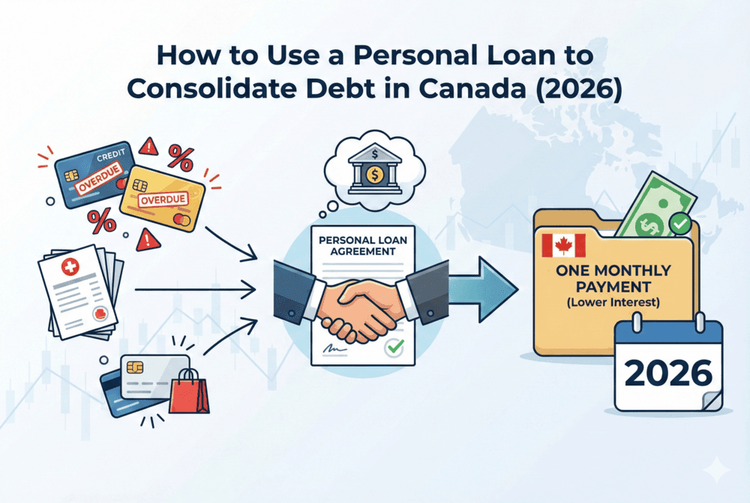
The problem is existing debt, not new capital. No government program refinances a stack of merchant advances or credit card balances. That is the territory of debt consolidation loans, qualified on your income and credit rather than a project plan.
The sequencing play: run both at once
The mature answer is usually both, in parallel:
- Size the urgent need honestly and cover it privately. Before signing, run the amount, rate and term through the Loan Payment Calculator so the payment fits the months when revenue is thin.
- Start the government application the same week, aimed at the cheaper capital behind the urgent need: the equipment purchase, the fit-out, the growth project. Read the eligibility criteria first; fit is the whole game.
- Disclose everything on both sides. Lenders on both sides expect stacked financing, and hidden obligations are a standard rejection reason.
- When the government money lands, let it do the heavy lifting and clear or reduce the faster, more expensive facility.
When the business loans hub ships its funding matcher, this sequencing decision, meaning which route fits your amount, urgency and stage, becomes a two-minute check against published program and lender criteria rather than an afternoon of reading. Until then, the business loans hub carries the current program records and lender profiles side by side.
Application share figures are drawn from aggregated Smarter Loans platform application data, Q2 2026 (Smarter Loans Lending Demand Index).
More in this series
This guide is part of our business financing series: Business Loans for the Self-Employed in Canada and Startup Financing in Canada With No Trading History.
Common questions
Is government business financing free money? Mostly no. Guaranteed and direct loans must be repaid with interest, and most regional agency contributions are repayable. True non-repayable funding exists through certain grant programs and tax credits, but it is tied to specific eligible activities, never general operations.
Can I combine a government program with a private loan? Yes, and it is common. A guaranteed equipment loan can sit alongside a private working capital facility, and lenders on both sides expect stacked financing. Disclose everything; hidden obligations are a standard rejection reason.
Do I need good credit for a government-guaranteed loan? The bank delivering the loan will check personal credit, because the guarantee reduces the bank's risk but does not remove its underwriting. Weak credit narrows options rather than closing them, and asset-backed structures help files that would fail a conventional application.
How long does government financing take? Plan in months for contributions and project funding, weeks for bank-delivered guaranteed loans, and somewhere between for direct government lending. If the need is measured in days, government programs are the wrong tool for that specific need, whatever they offer for the next one.
 Written by:
The Smarter Loans Editorial Team produces in-depth, original content to help Canadians navigate borrowing, credit, and personal finance with confidence.