




Disability loans in Canada: who qualifies, how disability income counts, and what to check first
The short answer: yes, many Canadian lenders accept disability income as qualifying income for a personal loan. That includes provincial disability assistance such as ODSP and AISH, CPP Disability payments, and private long-term disability insurance. What lenders assess is not the diagnosis or the source of the disability; it is whether the income arrives predictably every month, how much of it is already committed to existing debts, and what your credit history says about past repayment. Eligibility varies by lender and no approval is ever guaranteed, but a stable disability income with manageable existing obligations is a fundable file at a range of lenders. Just as importantly, borrowing is not always the right move, and this guide covers the alternatives that should be checked before any application is submitted.
Who qualifies for a disability loan
There is no separate product in Canada legally called a disability loan. The term describes an ordinary personal loan where the qualifying income happens to be disability related. The income types most lenders recognize are:
Provincial disability assistance. Programs such as the Ontario Disability Support Program and Alberta's Assured Income for the Severely Handicapped pay on a fixed monthly schedule, which is precisely the predictability lenders look for. Some lenders accept this income on its own; others require it to be combined with another source. Both approaches exist in the market, which is why comparing before applying matters.
CPP Disability. The federal Canada Pension Plan disability benefit is broadly accepted as qualifying income because it is a long-term federal entitlement with a consistent payment date.
Private long-term disability insurance and workplace benefits. Payments from an insurer or an employer-sponsored plan generally count, though a lender may ask for confirmation of how long the benefit is expected to continue.
Beyond the income source, the baseline requirements mirror any personal loan: you must be the age of majority in your province, a Canadian resident, and hold an active bank account where your income is deposited. Lenders read bank statements the same way for disability income as for any other: they want to see regular deposits, an account that stays above zero, and no pattern of NSF charges. Requirements vary by lender, and none of the above guarantees approval; it establishes that the door is open, not that every lender will walk you through it.
How much do borrowers on disability income typically ask for
Amounts in this segment are small by design, and that is worth understanding before applying. Applicants who list disability income typically request small amounts: the median request is $500, and 79.4 percent of these requests are under $1,500, according to Smarter Loans platform data for Q2 2026. That figure tells you two things. First, the typical need here is a short-term gap, not a major purchase: a repair, a prescription, a bill that landed before the payment date. Second, lenders serving this segment are underwriting small principals against fixed incomes, which keeps realistic loan sizes modest. If you are picturing a five-figure loan qualified on disability income alone, that expectation should be reset early, because it will shape which lenders are worth your time and which applications will only add inquiries to your credit file.
Takeaway: seven in ten requests in this segment are under $1,000, and fewer than one in twelve reaches $5,000.
What disability-income applicants actually look like
The income picture explains the request sizes. Applicants who list disability income report a median monthly income of $1,744, against $3,000 for the applicant pool as a whole, according to Smarter Loans platform data for Q2 2026. The averages sit higher ($2,626 versus $4,229) because some applicants combine disability income with other sources, but the gap holds at every level: this segment is budgeting roughly $1,200 a month less than the typical applicant.
Takeaway: at the median, disability-income applicants run on about 58 percent of the income of the general applicant pool, which is why responsible loan sizes in this segment stay small.
What the money is for differs too. Medical expenses rank far higher than in the general pool, while debt consolidation ranks lower, a pattern consistent with smaller balances and tighter month-to-month budgets rather than accumulated card debt.
Takeaway: medical costs drive a share of borrowing here that is more than one and a half times the general pool, while consolidation plays a smaller role.
Medical expenses as a borrowing purpose
Medical costs are a meaningful slice of why Canadians borrow at all. Medical expenses accounted for 9.7% of loan purposes in Q2 2026, according to Smarter Loans platform data. More than four in five medical requests are under $1,500, averaging $447 with a $400 median. The narrowness of that range is the useful signal: most medical borrowing in Canada is small, specific and short. If your medical expense sits inside that range, a small personal loan is one option, but a hospital or clinic payment plan, covered in the alternatives section below, often costs less or nothing at all.
Do loans affect my disability benefits?
This is the question that matters most, and the honest answer is: generally no, but confirm before you sign.
A loan is borrowed money that must be repaid. It is not income, and benefit programs generally treat it differently from earned income for that reason. Receiving a loan deposit does not usually reduce your monthly benefit the way employment earnings can.
However, two cautions apply. First, asset rules exist in most provincial programs: if borrowed money sits in your account past a reporting period, or is converted into an asset the program counts, it can interact with your eligibility. Second, reporting rules differ by province and by program, and they change. What is true for ODSP is not automatically true for AISH, and CPP Disability follows its own federal rules focused on work capacity rather than assets.
The safe sequence is simple: before borrowing, contact your caseworker or program office, describe the amount and purpose, and ask how it should be reported. That conversation costs nothing and removes the one risk that could make a small loan genuinely expensive.
What to compare before applying
On a small principal, the details decide whether a loan is a reasonable bridge or an expensive mistake. Before applying anywhere, compare:
APR including all fees. The advertised rate is not the full picture. Origination fees, administration fees and insurance add-ons all belong in the true annual cost. On a $500 principal, fees can matter more than the interest rate itself.
Total cost of borrowing in dollars. Convert everything to one number: what will I repay in total? On small loans, that figure is more revealing than any percentage.
The monthly payment, before you apply. Put the amount, rate and term into the Loan Payment Calculator first. On a fixed monthly income, seeing the exact payment against your benefit schedule is the fastest way to rule an offer in or out.
Repayment term and flexibility. A term matched to your benefit payment schedule prevents missed payments. Ask whether the payment date can be aligned with your deposit date.
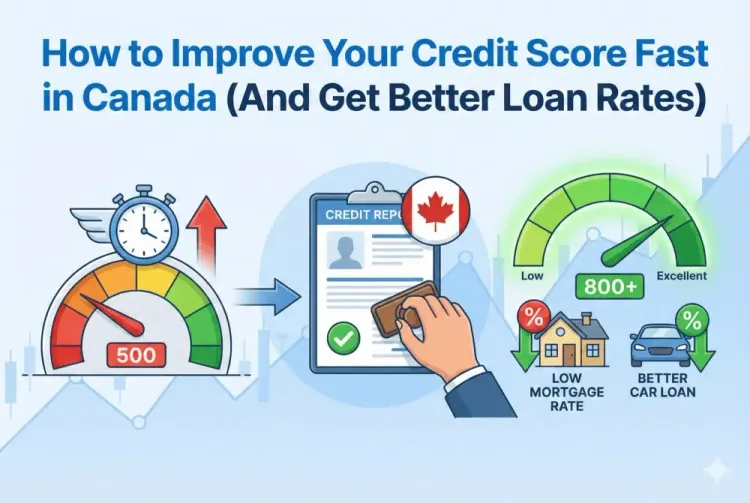
Credit bureau reporting. A lender that reports to the bureaus lets on-time payments rebuild your file. If your credit is thin or damaged, this is how a small loan becomes an investment rather than just a cost; the bad credit loans category covers lenders built for exactly this situation.
Prepayment penalties. If you can repay early, you should be allowed to without a fee. Confirm this in writing before signing.
Comparing across the personal loans market through a single soft-check application protects your credit score, which matters more here than in almost any other borrower segment: on a fixed income, the credit file you build now is the only lever you control for future borrowing costs.
Alternatives to a disability loan
| Program | Who it serves | Where to confirm rules |
|---|---|---|
| Canada Disability Benefit | Working-age Canadians with disabilities | canada.ca, search Canada Disability Benefit |
| Disability Tax Credit | Anyone with a qualifying impairment | canada.ca, search Disability Tax Credit |
| Registered Disability Savings Plan | DTC-eligible savers | canada.ca, search RDSP |
| Provincial assistance (ODSP, AISH and others) | Province-specific eligibility | Your provincial program office or caseworker |
| CPP Disability | Contributors unable to work | canada.ca, search CPP disability |
Before any loan application, work through this list. Several of these options cost nothing, and skipping them is the most common mistake in this segment.
Federal supports you may not have claimed. The Canada Disability Benefit provides direct payments to eligible working-age Canadians with disabilities. The Disability Tax Credit reduces income tax and unlocks other programs, including the Registered Disability Savings Plan, which includes government grants and bonds. Money you are entitled to is always cheaper than money you borrow.
Provincial top-ups and payment schedules. Provincial benefit programs pay on fixed schedules, and knowing exactly when deposits land can eliminate the need to borrow at all. Our guide to Canada PRO deposit dates covers when provincial program payments arrive.
Hospital and clinic payment plans. For medical bills specifically, most hospitals and many clinics offer interest-free payment plans if you ask before the bill goes to collections. This is almost always cheaper than borrowing to pay the bill in one go.
Non-profit credit counselling. If the reason you need a loan is existing debt pressure, a non-profit credit counsellor can negotiate with creditors and structure a repayment plan. The Financial Consumer Agency of Canada maintains guidance on finding legitimate debt help.
Emergency assistance through provincial programs. Most provincial disability programs include discretionary or emergency benefits for specific costs such as medical devices, moving expenses or urgent repairs. Ask your caseworker what exists before borrowing privately for the same purpose.
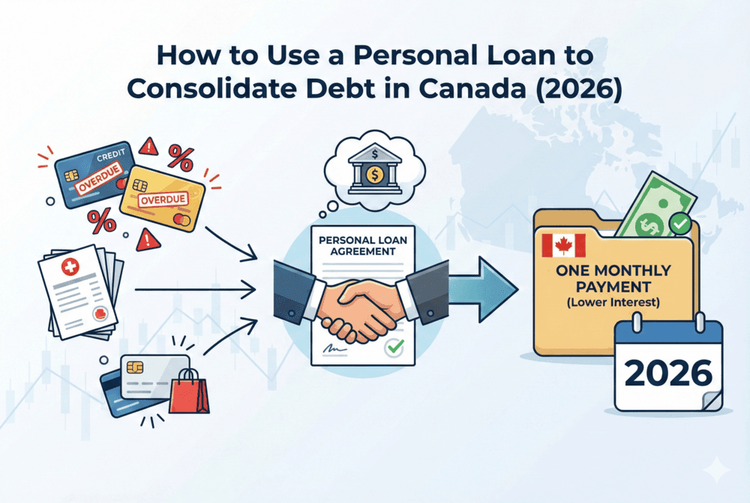
Consolidating instead of adding. If you already carry multiple debts, adding a new loan on top rarely helps. A debt consolidation loan that replaces several payments with one lower payment can reduce monthly pressure without increasing total debt.
Common questions
Can I get a loan while on ODSP or AISH? Yes, some lenders accept provincial disability assistance as qualifying income, though others require it alongside another income source. Approval depends on income stability, existing debts and credit history, and is never guaranteed. Confirm reporting requirements with your caseworker before borrowing.
Does CPP-D count as income for a loan? Generally yes. CPP Disability is a long-term federal benefit with predictable monthly payments, which is what lenders are assessing when they evaluate income.
Will taking a loan reduce my benefit payments? Generally no, because a loan is borrowed money rather than income. Asset and reporting rules vary by province and program, so confirm with your program office before signing anything.
What if I have bad credit and disability income? Options exist, but they cost more. Focus on lenders that report to credit bureaus so on-time payments rebuild your file, keep the principal small, and compare total dollar cost rather than the advertised rate.
Are there interest-free options I should try first? Yes: unclaimed federal and provincial benefits, hospital payment plans for medical bills, and emergency assistance through your provincial program. All of these should be checked before any loan application.
Statistics in this article come from the Smarter Loans Loan Applicant Index, based on anonymized platform data.
 Written by:
The Smarter Loans Editorial Team produces in-depth, original content to help Canadians navigate borrowing, credit, and personal finance with confidence.