



On this page
Two bureaus, two scores
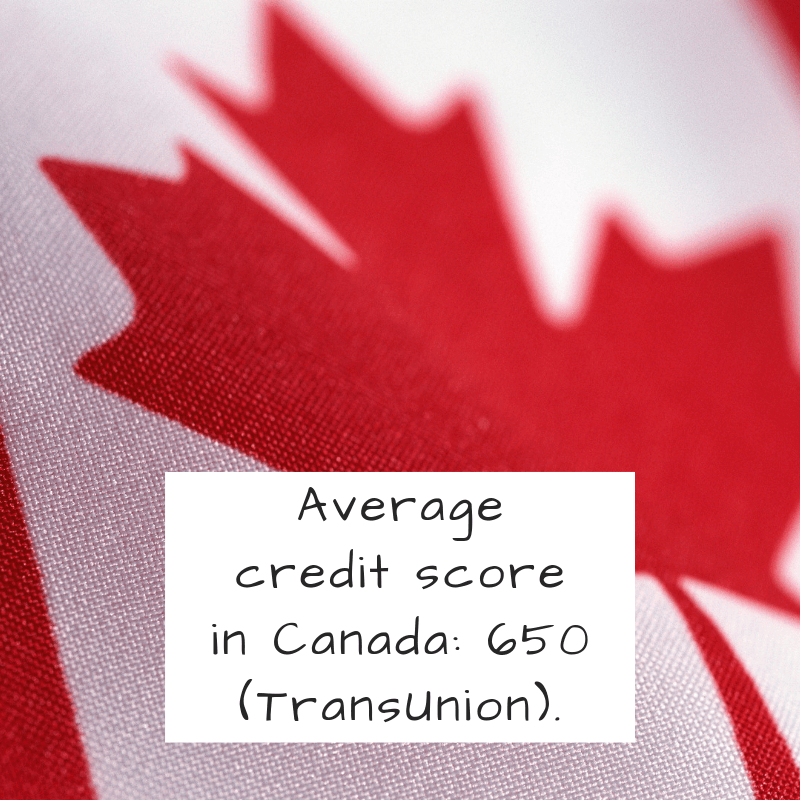
Canada has two credit bureaus, Equifax and TransUnion. Each keeps its own file on you, each calculates its own score, and neither one is the official version. If you have checked both and found them twenty, forty or fifty points apart, nothing is wrong. That gap is the normal state of a Canadian credit file, and understanding why it exists tells you which number to pay attention to when it matters.
Why the scores differ
Both bureaus publish the same explanation, and it comes down to two things.
- They hold different data. Lenders choose which bureau to report to. Some report to both, some to one, some to neither. So the loan that appears on your Equifax file may be missing from TransUnion, and the late payment TransUnion recorded may never have reached Equifax. Two files built from different inputs cannot produce the same output.
- They use different models. Each bureau runs its own scoring model, and each model weights the same factors a little differently. Both also offer several models for different purposes, so the score you see on a consumer app may not be the one a lender receives.
Equifax adds a third point worth keeping: a score is a snapshot. It changes as your file updates, so two scores pulled a week apart can differ for timing alone. Checking both on the same day removes that variable and leaves only the real differences.
What counts as a good Equifax score
Equifax Canada's own bands are: good from 660 to 724, very good from 725 to 759, and excellent from 760 up, on a scale that runs from 300 to 900. Below 660 the file reads as fair, and Equifax describes scores under 560 as generally poor. So a good Equifax score starts at 660, and the same threshold is the one most lenders use whichever bureau they pull. Our guide to whether 700 is a good credit score walks through every band and what each one gets you approved for, so this page will not repeat that table.
One thing to know if you found this page from the United Kingdom or the United States: those countries use different scales. A Canadian Equifax score of 700 is a good score here; it does not map onto a 700 on a UK scale or a US FICO scale, and comparison sites that mix the three are not telling you anything about Canada.
Which score lenders use
Lenders choose a bureau, and most do not publish which one. Some pull one, some pull both and take the lower or the average, and some use their own internal scoring built on top of the bureau data. Neither Equifax nor TransUnion publishes a list of which lenders use which, and the lists circulating online are third-party guesses.
The practical consequence is simple: you cannot game it. If one of your scores is noticeably lower, assume a lender might see that one, and fix whatever is dragging it down rather than hoping the other file gets pulled. The credit building loans market underwrites on whichever file it receives.
What borrowers in each band request
Whichever bureau produced it, the band your score lands in shapes what you ask for. Across Smarter Loans personal loan applications from August 2025 to July 2026, applicants reporting great credit requested an average of $4,448, and those reporting good credit $3,285. Better credit opens larger loans at lower rates, and borrowers use that room. If your two scores straddle a band boundary, the lower one is the safer guide to what you will be offered.
When the gap is a warning sign
A twenty to fifty point difference is normal. A gap of a hundred points or more is not, and it usually means one file contains something the other does not. The common causes are a collection or late payment reported to only one bureau, an account you do not recognise, or in the worst case an identity fraud that has reached one file first. That last one is why checking both matters: a fraudulent account often appears at one bureau before the other, and the score gap is the earliest signal you get.
If you find a large gap, pull both full reports, not just the scores, and compare the accounts listed. Anything on one file and not the other is your lead.
How to check both for free
Both bureaus provide your credit report free in Canada, and checking it is a soft inquiry that does not affect your score. Equifax and TransUnion each offer a free consumer report through their own sites; several banks and apps also show one bureau's score at no cost, though usually a consumer model rather than the one lenders see. Check both bureaus at least once a year, and both before any major application. If you find an error, dispute it with the bureau that holds it, since fixing one file does not fix the other.
Our guide to how to rebuild credit in Canada covers what to do once you know where each file stands.
Whatever either score says, one application shows which lenders consider a file like yours.
Frequently asked questions
What is a good credit score with Equifax?
660 and above on the Canadian 300 to 900 scale, per Equifax Canada's own bands. 725 to 759 is very good and 760 and up is excellent. Below 660 the file reads as fair.
Why is my Equifax score different from my TransUnion score?
Because the two bureaus hold different data and use different scoring models. Not every lender reports to both, so each file contains a slightly different set of accounts, and each bureau weights the factors a little differently. A gap of twenty to fifty points is normal.
Which is more accurate, Equifax or TransUnion?
Neither. Each is accurate to the data it holds, and each holds different data. The score a lender uses is whichever bureau it pulls, so the useful habit is keeping both files clean rather than choosing one to trust.
Do lenders in Canada use Equifax or TransUnion?
Both are used, and lenders do not generally publish which. Some pull one bureau, some pull both. Neither bureau publishes a list, so any online list naming which bank uses which is a guess. Assume either file could be the one that counts.
Sources
- Equifax Canada, why credit scores differ, verified 3 September 2026.
- TransUnion Canada, what is a good credit score, verified 3 September 2026.
- Equifax Canada, what is a good credit score, for the band ranges.
- Smarter Loans personal loan applications, August 2025 to July 2026, for the band figures. Band is self-reported at application.
Related reading: is 700 a good credit score and credit scores across Canada by province.
 Written by:
The Smarter Loans Editorial Team produces in-depth, original content to help Canadians navigate borrowing, credit, and personal finance with confidence.